Currency
GBP - British Pound


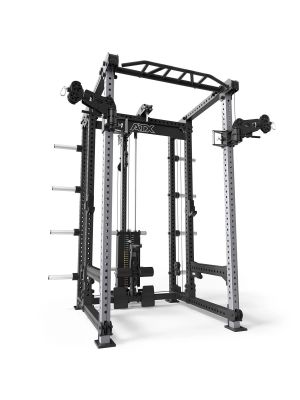
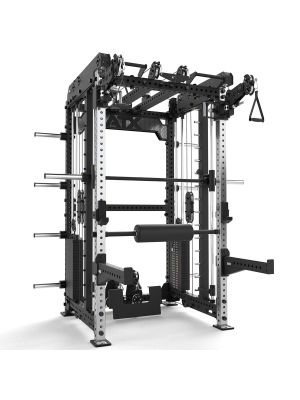
The floating pulley assembly used on the MPHR-780 is an effective and well-proven design, as it removes the need to clip and unclip multiple attachment points when changing cable heights or outlet positions. This allows fast, intuitive adjustments and keeps the machine efficient and user-friendly. By design, the assembly is free to self-align under load, and with this in mind, a small amount of care during use, along with occasional inspection and maintenance, ensures the cable continues to run true and the system performs as intended over the long term.
When assembling or maintaining the floating pulley assembly, it is important to avoid introducing any twists into the cable. Even a minor twist may appear insignificant initially, but with continued use it will tend to exaggerate over time and can affect tracking, alignment, and smoothness of operation.
During initial assembly, it is worth remembering that the cable will have been tied and coiled tightly for an extended period. Before installation, it is strongly recommended to unroll the cable and allow it to settle naturally. This helps relieve residual torsion that may otherwise be transferred into the pulley system once tension is applied.
Our installation team lays out cables ahead of assembly and ensures they run true before commissioning a unit, and many customers assembling machines themselves take similar care. Even so, it is important to note that a cable twist can still manifest months later. This is most commonly due to slight and entirely normal cable stretch under regular, repeated use. This process can be considered as the cable “bedding in” and presents an ideal opportunity to re-straighten and re-tension the cable to optimise long-term performance.
Maintaining consistent tension in the cable, both when the machine is not in use and during operation, is the simplest and most effective way to keep the cable running true and the floating pulley assembly correctly aligned. Smooth, controlled movements should always be encouraged, as jerky or uneven loading can contribute to cable twist.
If a slight twist does occur, the recommended correction is to remove the double-pulley block and straighten the cable fully before reassembling the system. At this stage, it is also advisable to increase the available cable tension slightly using the built-in adjustment mechanisms. In cases where the cable has developed more pronounced twisting, it may be necessary to remove additional pulleys further along the cable path to fully relieve the twist. Once reassembled, a small increase in available cable tension is again recommended to help the system settle and remain stable over time.
On the MPHR-780, cable tension can be adjusted at the following locations:

If one adjustment point offers no further scope for increasing tension, attention should be shifted to the remaining locations. For example, the threaded pulley bracket connecting to the selectorised weight stack rod is often tightened fully during initial setup. In such cases, further fine adjustment should be carried out using the floating double-pulley bracket and/ or the attachment eyelet on the moving trolley arm, rather than attempting to over-tension a single point.
On other machines using floating pulley assemblies, whether within the ATX range or across other brands, one or more of these adjustment points will typically be present. These are provided to allow correct and balanced cable tension to be achieved following installation, bedding-in, or routine maintenance.
While increasing tension is beneficial to cable tracking and stability, care should be taken to avoid over-tensioning. Excessive tension can cause the top plate of the weight stack to lift slightly when the machine is at rest. Similarly, leaving a heavier-than-standard cable handle setup attached semi-permanently, for example a connector bar with a lat pulldown attachment connected to two upper eyelets, may create a false impression of correct cable tension. In these cases, the additional handle weight can exceed the 2.5 kg top-plate counterbalance and may also result in the top plate lifting unintentionally.
While this guidance applies specifically to the MPHR-780, the same principles apply to other machines using floating pulley assemblies. Systems with longer cable runs, multiple outlets, or more complex routing are inherently more sensitive to cable behaviour due to increased cable length and a greater number of directional changes. As complexity increases, careful assembly, smooth use, and occasional re-tensioning become increasingly important to ensure correct cable tracking and long-term performance. A floating pulley, alongside a much shorter cable and low complexity, such as the CPT-800 single adjustable pulley, will rarely see any issue, even with extreme and constant heavy-duty use.
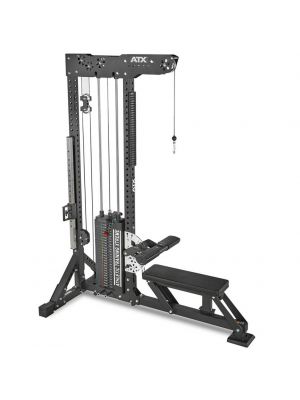
Machines using floating cable systems with height-adjustable outlets, such as the LSW-850 Trinity Tower, are also subject to the same inherent principles. If a height-adjustable outlet is used for a specific exercise (e.g. lat pulldowns) and then changed for another outlet (e.g. seated rows), returning the height adjustment to a neutral or resting position helps maintain appropriate cable tension throughout the system. Where excess slack is allowed to remain, the likelihood of cable twist within a floating assembly increase. This is not indicative of a fault, but rather a characteristic of floating systems that benefit from periodic checking, particularly in busy or unsupervised gym environments.
Common Causes and Considerations (Helpful Reference)
These are normal characteristics of adjustable, floating cable systems, particularly when complex, and are easily managed with routine inspection.
Helpful Maintenance Reminder
As part of regular maintenance, periodically checking cable tension and alignment helps ensure smooth operation and long-term reliability. Addressing minor changes early prevents them from becoming more noticeable over time and keeps the system operating as intended.
Design Reassurance
Floating pulley assemblies are widely used across high-quality equipment because they improve usability, adjustment speed, and training efficiency. The occasional need for minor cable re-tensioning is a normal aspect of optimising a dynamically adjustable system and should be viewed as routine fine-tuning rather than corrective maintenance.
Operational Environment
All-in-one style multigyms, such as the MPHR-780, are particularly well suited to environments where space is a premium, such as a home/ garage gym and a PT Studio. While the machine may be rated for commercial use, this is an indication of the build-quality. The practicality of ensuring a multigym is correctly used and appropriately maintained in a commercial gym/ club is not realistic – it is neither a good choice for the gym member or operator.
Blog post added by Matt Bembridge 22nd January 2026