Currency
GBP - British Pound

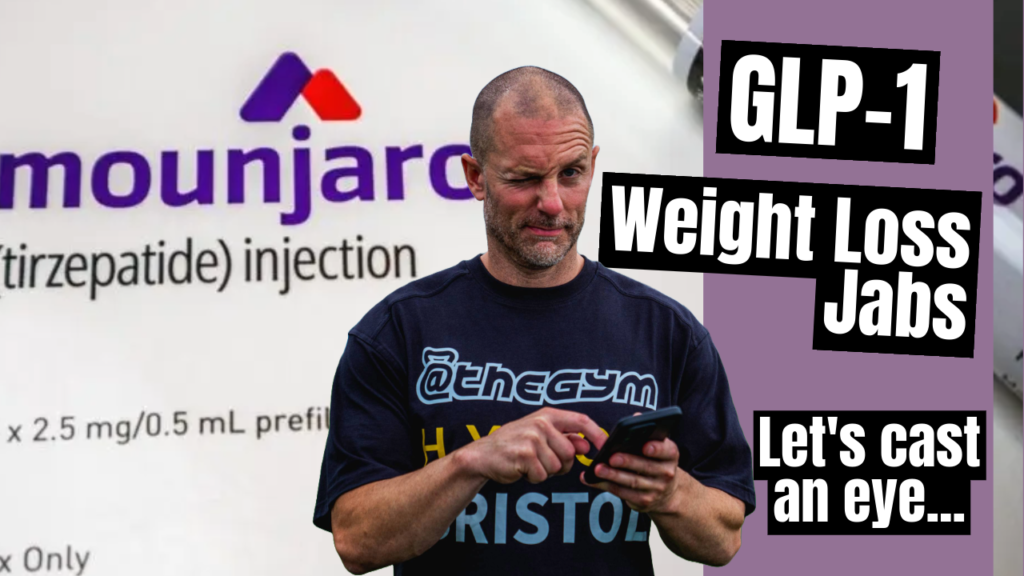
I’ve been asked on several occasions for my view on the rise of GLP-1 weight loss medications within the fitness and gym industry. I don’t generally offer opinions unless asked, and I don’t claim to be an authority on the subject. What follows is simply my perspective: mixed, measured, and ultimately cautious.
I can see circumstances where GLP-1 medications may have real value. I can also see reasons for concern. This is not medical advice, nor an attempt to instruct or persuade, but a reflection on how these drugs intersect with fitness culture, responsibility, and long-term outcomes.
(For clarity, the drug is commonly referred to as “Mounjaro”, sometimes misspelled as “Manjaro”, alongside “Ozempic” and other GLP-1 medications.)
At a recent industry event, Rob Handy, Founder of Independent Gyms, raised a thoughtful and balanced point. GLP-1 use is happening around us, whether we like it or not. It is already impacting our industry, our members, and the conversations taking place inside gyms.
At that point, I’ll admit I asked a very basic question: “What is GLP-1?” Like many people, I knew the brand names Mounjaro and Ozempic, but not the classification itself. That in itself is telling. The brand names have travelled faster than the understanding of what the drugs actually are or how they work.
If you don’t know something, don’t be afraid to ask. That moment highlighted something important: this conversation isn’t happening only among clinicians. It’s happening in gyms, on social media, and in everyday settings, often with familiarity but limited context.
In simple terms, GLP-1 stands for glucagon-like peptide-1. It’s a hormone the body naturally releases after eating, helping to regulate blood sugar and signal fullness. GLP-1 medications are designed to mimic that effect. They increase insulin release when needed, slow digestion, reduce appetite, and help people feel fuller for longer. Originally developed to treat Type 2 diabetes, they later demonstrated significant weight-loss effects, bringing them into the mainstream.
Returning to Rob Handy’s point, his suggestion was not promotional. It was pragmatic. If people are using these drugs, gyms should not ignore them. Instead, they could consider how best to support members during and after use, and how to ensure people don’t feel judged or excluded.
It’s a fair point, made in good faith.
Where I differ is not in acknowledging reality, but in how easily acknowledgement can slide into encouragement.
If someone chooses to use GLP-1 medication, that is their decision and their body. I have no interest in policing individual choices.
What I am wary of is the promotion of these drugs by fitness professionals. Even subtle endorsement carries weight when it comes from coaches, gym owners, or respected industry figures. It reframes a prescription medication as a lifestyle tool or a shortcut to results.
That shift matters.
Gyms have influence. With that influence comes responsibility.
There is a reason GLP-1 drugs have crossed over from diabetes treatment into mainstream weight loss, and it isn’t hype alone.
In clinical trials, people using these drugs typically lost significantly more weight than those using older medications or lifestyle changes alone. In simple terms, many participants lost somewhere in the region of 15–20% of their bodyweight over a year to 18 months, which is a level of weight loss that has historically been very difficult to achieve with medication.
Beyond the scales, some studies also showed improvements in markers linked to heart health in people who were already at high cardiovascular risk. That added credibility and accelerated wider acceptance.
Add to this easier adherence, strong appetite suppression, public visibility, and social media exposure, and it’s easy to see why demand exploded.
Acknowledging these benefits is important. Ignoring them weakens the argument for caution.
Appetite suppression does not automatically mean better nutrition.
One of my concerns is that some people may simply eat less of the same poor-quality food, rather than learning how to eat better. Reduced calories without improved food choices can lead to inadequate protein, fibre, and micronutrient intake.
If strength training, movement, and nutrition education are not addressed alongside medication, the fundamentals are missing. When the drug is stopped, weight regain becomes far more likely. In that sense, GLP-1 can become a pause button rather than a solution.
For me, these drugs are best viewed as a short-term aid; not a replacement for lifestyle change and not something most people need.
That said, there is a genuine positive I’ve seen first-hand. Some individuals who have lost weight using GLP-1 medication have gained enough confidence to step into a gym environment for the first time. While I personally experience gyms as places of acceptance, encouragement, and self-improvement, it’s clear that this isn’t how everyone perceives them initially. In many cases, the barrier appears to be internal: self-doubt rather than reality.
If the medication helped someone feel confident enough to take that first step, that is undeniably beneficial. Where it works best, in my view, is when that initial confidence becomes the gateway to long-term habits; resistance training, better nutrition, community, and consistency.
This is also where Rob Handy’s point intersects with mine. Helping people make that transition into sustainable behaviours has value. The difference lies in how that help is framed.
The risk is not in that first step. The risk is stopping there.

A useful comparison here is anabolic steroids, not because they are the same as GLP-1 drugs (they are nothing alike!), but because similar patterns emerge when drugs intersect with gym culture and aesthetic goals.
Steroids exist on a spectrum. They can enhance performance and physique, but they do not replace training quality, nutrition, recovery, or consistency. When those fundamentals are absent, the drug doesn’t solve the problem; it merely disguises it.
That distinction matters. In fitness spaces, substances can easily shift from being tools used in specific contexts to perceived shortcuts to outcomes. Once that happens, the focus moves away from process and onto results alone.
GLP-1 drugs risk following a comparable path if they are framed primarily as a solution rather than as a limited, supporting intervention. The issue is not the existence of the drug, but how it is positioned, discussed, and normalised within environments that are meant to promote long-term health behaviours.
One area that deserves calm discussion is contraception.
Guidance has emerged advising women using certain GLP-1 medications, particularly tirzepatide (Mounjaro), not to rely solely on oral contraceptive pills during certain phases of use. This is due to how the drug affects digestion and absorption.
There is currently no evidence that GLP-1 drugs cause harm to an unborn child, and that must be stated clearly. However, there is limited long-term human data in this area.
History reminds us why caution exists when new drugs are widely adopted before long-term outcomes are fully understood. Thalidomide was once prescribed as an anti-sickness medication and considered safe, until its devastating effects became clear years later, resulting in severe birth defects and the children often referred to as “flids”.
This is not a comparison, nor a prediction. It is a reminder that the “unknown” should always be part of the conversation.
This isn’t the first time the fitness and weight-loss world has rallied around a pharmacological solution. In the 1990s, ephedrine was widely regarded as a “wonder” weight-loss aid. As a stimulant, it increased metabolic rate, suppressed appetite, and acted as a bronchodilator, which for some users made breathing feel easier during exertion. In purely functional terms, it did what it claimed to do, and for many, it still would.
Ephedrine hasn’t fallen out of favour because it stopped working. It has fallen out of favour because our understanding of its risks improved, particularly around cardiovascular strain, and because newer drugs have entered the conversation promising similar or greater results with a different risk profile. In that sense, ephedrine is no less of a “wonder” drug than it was then; it has simply been overtaken by changing expectations, tighter regulation, and the arrival of a new solution that appears, at least on the surface, to offer greater reward with fewer downsides.
The relevance here isn’t to promote or dismiss ephedrine, but to recognise how quickly attention shifts in this space. When a new option arrives that feels easier, more effective, or safer, enthusiasm moves on. That pattern helps explain why GLP-1 drugs have gained traction so rapidly, and why history encourages a measured response rather than blind excitement.
What tends to change over time isn’t the desire for results, but which drug appears to offer them most easily.
GLP-1 medications are prescription-only drugs intended to be used under medical supervision. In theory, that safeguards patients.
In reality, a significant number of people are obtaining these drugs without a legitimate prescription, often through unregulated online sellers or informal supply chains. That carries real risks: incorrect dosing, counterfeit products, poor advice, or no advice at all.
Some of the people supplying these drugs are individuals I wouldn’t buy a second-hand car from, let alone trust with something I’m putting into my body. That alone should give pause.
There is an uncomfortable truth here. Many people are already taking GLP-1 drugs without prescriptions. If access were better regulated through legitimate pharmacy channels, users would be more likely to receive at least some sensible guidance, buy the product they think they are buying, and reduce the risks associated with illicit supply.
I hold a similar view with many substances: legitimate supply with professional oversight is generally safer than driving demand underground, where money supports unregulated operations and users take on unnecessary risk.
Gyms cannot realistically pretend that GLP-1 use doesn’t exist. People will still walk through the doors having used it, whether we like it or not.
However, acknowledging its existence is not the same as endorsing it, and support does not have to take the form of dedicated groups or programmes centred on drug use. In my view, that risks encouraging or normalising something I’m personally wary of.
An alternative is leadership by example.
Rather than creating support structures around drugs, gyms can focus on what they already do best: education, training, and habit-building. In our case, that means offering open training sessions, sharing practical advice, and demonstrating what can be achieved through consistency, resistance training, and nutrition without pharmaceutical shortcuts.
That approach avoids judgement, avoids preaching, and avoids promotion. It allows people to make their own choices while keeping the gym environment centred on fundamentals rather than substances.
Gyms should be places where long-term behaviours are modelled and reinforced, not places where drugs of any kind become a focal point.
I choose not to promote or support GLP-1 drugs as a solution.
That does not mean I condemn those who use them. It does not mean I deny their place in specific medical contexts. It simply means I am wary of enthusiasm that runs ahead of evidence, fundamentals, and long-term thinking.
People are free to make their own choices. My concern is not choice itself, but how easily shortcuts can distract from the work that actually lasts.
by Matt Bembridge, AKA Gym Professor
