Currency
GBP - British Pound

A strong, well-developed back is one of the most important foundations in any training programme. Whether the goal is building muscle, improving posture, increasing pulling strength, or supporting better performance in sport, effective back training deserves serious attention.
The back is not a single muscle group. It is a complex network of muscles working together to stabilise the spine, control shoulder movement, and generate power through pulling, rowing, hinging, and extension patterns. That means a smart back workout should do more than repeat endless rows and pulldowns. It should train the back from multiple angles, through different resistance profiles, and with a mix of vertical pulls, horizontal pulls, spinal support work, and posterior chain development.
In this guide, we will break down how to train your back properly, which muscles you need to target, common mistakes to avoid, and how machines such as the JAWS Force Pullover Machine, JAWS Strength Smith Row, JAWS Force Iso-Lateral Row, JAWS Prime Lat Pulldown (Split-Stack), and JAWS Strength Plate-Load Hyperextension can be used to create a complete and effective back training plan.
Back training is often associated with aesthetics - wider lats, more upper back thickness, and better overall shape - but its benefits go far beyond appearance.
A stronger back contributes to:
For gym owners and facility operators, back training is also one of the most consistently popular categories on the gym floor. Members want equipment that helps them build width, thickness, and strength, while also feeling secure and easy to use. That is why well-chosen back machines are such an important part of a commercial gym layout.
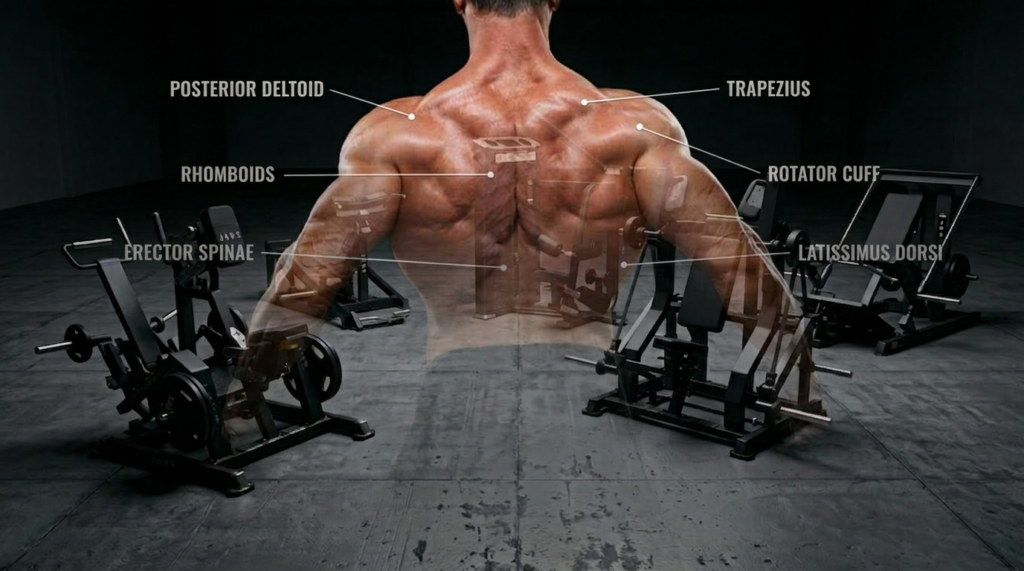
Understanding the main muscles involved helps explain why different pulling patterns matter.
The lats are the large muscles running down the sides of the back. They are heavily involved in shoulder adduction and extension, making them the primary drivers during pulldowns, pullovers, and many rowing movements. Well-developed lats contribute significantly to upper body width.
The traps span the upper and mid-back and play a major role in scapular movement and stability. Different rowing angles and pulling patterns stimulate different areas of the trapezius.
Situated between the shoulder blades, the rhomboids assist with scapular retraction and contribute to upper back density.
These smaller muscles assist with shoulder extension and horizontal pulling movements.
The spinal erectors run along the spine and are essential for spinal extension and trunk stability. They play a major role in hyperextensions and many compound lifts.
While not technically upper back muscles, the glutes and hamstrings support spinal stability and are heavily involved in hinging and extension movements.
A productive back programme should train multiple movement patterns rather than repeating the same exercise variations.
A well-rounded back session typically includes:
Movements such as lat pulldowns train the lats through a long overhead range and are key for developing upper back width.
Rows train the mid-back, rhomboids, traps, and rear delts while also contributing to lat development.
Exercises such as pullovers reduce arm involvement and allow the lats to work through shoulder extension more directly.
Spinal extension movements strengthen the lower back and posterior chain, helping support both training and daily movement.
Free weights will always have a place in back training, but machines provide clear advantages in commercial and performance environments.
Well-designed machines can offer:
This allows users to focus on effort, positioning, and muscle engagement without unnecessary complexity.
The following JAWS machines illustrate how different pieces of equipment can combine to create a complete back training setup.
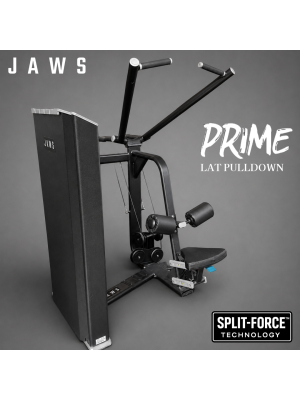
A quality lat pulldown is a cornerstone piece in any gym. The JAWS Prime Lat Pulldown (Split-Stack) adds an additional level of versatility through its dual stack design.
Because each side interconnects with the same stack, users can maintain balanced loading and reduce the chance of one side dominating the movement. This encourages symmetrical pulling mechanics and improved muscle engagement across both sides of the back.
From a training perspective, the lat pulldown remains one of the most effective ways to develop lat width while allowing controlled progression through different loads.
The JAWS Force Pullover Machine provides a unique way to train the lats through shoulder extension while minimising grip and biceps fatigue.
In many traditional back exercises, the arms can fatigue before the lats receive sufficient stimulus. The pullover machine allows users to isolate the lats more directly, making it particularly effective as a pre-exhaust movement before heavier pulling exercises.
Benefits of pullover training include:
This makes the pullover machine a valuable addition to any serious back training setup.
For building back thickness and mid-back density, rowing movements are essential.
The JAWS Force Iso-Lateral Row allows each arm to move independently, creating a natural movement path while ensuring balanced development between sides.
Iso-lateral plate-loaded machines also allow users to generate significant force, making them highly effective for developing upper back strength while maintaining consistent movement mechanics.

The JAWS Strength Smith Row provides another effective horizontal pulling option while offering the stability of a guided bar path.
This allows users to focus fully on elbow drive, scapular movement, and muscular contraction without needing to stabilise a free bar in space.
For many lifters, this stability allows greater training intensity and more consistent repetition quality, making it an excellent addition to a comprehensive back training area.
A complete back training programme should include lower back and posterior chain work.
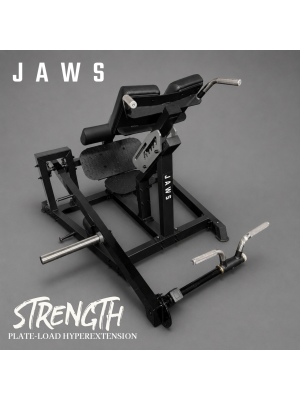
The JAWS Strength Plate-Load Hyperextension allows spinal erectors, glutes, and hamstrings to be trained through a controlled extension pattern. Plate-loaded resistance also allows users to progressively increase the challenge beyond bodyweight-only variations.
Strengthening the lower back and posterior chain contributes to overall trunk stability and supports many other strength movements.
A productive back workout often benefits from starting with targeted activation, moving into compound pulling work, and finishing with posterior chain support.
The following structure allows a complete session to be performed efficiently within roughly an hour.
3 sets of 15–20 reps
Beginning with pullovers activates and fatigues the lats while minimising arm involvement. This helps ensure the lats are engaged before heavier pulling movements begin.
3 sets of 10–12 reps
Vertical pulling builds lat width and upper back strength. The split-stack design promotes balanced loading between sides.
3 sets of 10–12 reps
This heavy horizontal row develops mid-back thickness while allowing each side to work independently.
3 sets of 10–12 reps
A second rowing pattern increases total back training volume while maintaining a stable and controlled movement path.
3 sets of 15–20 reps
Finishing with hyperextensions strengthens the lower back, having acted as a stabiliser to this point, and posterior chain while allowing higher repetition work in a controlled movement.
Back training does not need to be overly complicated. Most pulling and hinging exercises are simply structured variations of natural human movement patterns.
Many exercises sometimes described as “advanced” are fundamentally simple movements performed with greater load or precision.
Take the deadlift as an example. At its core, the movement is simply picking something up from the floor - a task most people perform regularly in everyday life.
The real discussion surrounding deadlifts often concerns how heavily they are loaded and how frequently they appear in a training programme. Like any lift, there is always a balance between stimulus and recovery.
Machines such as pulldowns, rows, pullovers, and hyperextensions allow users to accumulate significant back training volume while controlling fatigue and maintaining consistent technique. They do not replace foundational movements; they simply provide additional tools for developing the same muscle groups effectively.
A well-designed back training programme should include multiple pulling patterns and posterior chain work.
The most effective setups typically combine:
The JAWS Prime Lat Pulldown (Split-Stack) provides balanced vertical pulling.
The JAWS Force Pullover Machine allows focused lat training.
The JAWS Force Iso-Lateral Row and JAWS Strength Smith Row deliver powerful rowing movements for back thickness.
The JAWS Strength Plate-Load Hyperextension ensures lower back development is included.
Together, these machines help create a back training environment that is effective, balanced, and suitable for a wide range of training goals.
Article by Matt Bembridge, AKA Gym Professor