Currency
GBP - British Pound

A lot of people like the idea of owning a gym.
I did. Most gym owners I know did. For many of us, it starts the same way: we train somewhere meaningful, we feel part of something, and eventually the thought creeps in – I could do this. Maybe even I could do it better.
That instinct isn’t wrong. But the reality of owning a gym is very different to the picture most people carry in their heads.
Owning a gym isn’t just about training, equipment, or atmosphere. It’s about responsibility, repetition, decision fatigue, people management, cash flow, and making peace with the fact that the thing you love doing most will slowly become the thing you do least.
And yet – despite higher costs, more competition, and tighter margins – independent gyms continue to grow.
That contradiction is worth unpacking.

From the outside, gym ownership can look deceptively simple. You open the doors, create a great space, build a community, and let word of mouth do the rest.
The reality is closer to this:
You’re not just running a training space. You’re running a small business that happens to involve barbells.
That doesn’t mean it’s a bad business – but it is a demanding one, and it doesn’t suit everyone who loves training.

Despite all of that, member numbers across many independent gyms are trending upward.
This isn’t because costs aren’t rising or competition isn’t real. It’s because the demand side has changed.
More people are training consistently. Health, strength, and routine have shifted from “nice to have” to non-negotiable. At the same time, large commercial gyms are trying to be everything to everyone: cheap, premium, functional, social, wellness-focused, influencer-friendly.
The result is dilution.
Independent gyms tend to win not by scale, but by clarity. They don’t need every member; they need the right members. People who want to train properly, feel known, and belong to something with an identity.
As fitness offerings become more fragmented – much like politics or media – people gravitate toward places that align with how they see themselves.
That trend works in favour of independents who know who they are for.

There’s another version of gym ownership that doesn’t get talked about as much: the home gym.
For a lot of people, a home gym scratches the same itch. Control over the space. Choice of equipment. No opening hours. No compromise. Often shared with mates, training partners, or family.
In many ways, it’s the purest form of gym ownership. No overheads in the traditional sense, no members to manage, no commercial pressure. Just training.
It’s also not a new idea.
I grew up training at Bob’s Gym, which many people remember as being in an old bus depot. What fewer people know is that before that, it started in a large shed in Bob’s garden back in the 1970s. No branding. No business plan. Just weights, people, and consistency.
That lineage matters. It reminds us that gyms didn’t start as lifestyle brands. They started as places where people trained.
There’s nothing wrong with wanting to own a gym. But it’s worth being honest about which version you’re drawn to.
Problems tend to arise when people want the feel of one but the reality of the other.
Independent gyms succeed when owners accept the trade-offs, commit to the long game, and build something specific rather than trying to please everyone.
And home gyms succeed when people recognise that sometimes the desire isn’t to run a business at all – it’s simply to create a place where training matters.
Independent gyms work best when they’re treated like clubs.
Not just in name, but in behaviour.
Much like a local football or rugby club, when members respect the environment, see it as a shared space, and feel part of something bigger than themselves, everything improves. Standards rise. Equipment lasts. Culture strengthens. People look after each other.
But there’s another side to that coin.
For a gym to stay healthy long-term, it has to be run properly as a business. Profit isn’t greed; it’s oxygen. It allows you to reinvest in the team, the environment, the equipment, and the experience. Plus, it means you can support local causes. It gives you room to improve what needs improving - and occasionally to add things simply because they raise the standard.
Members notice that.
They see new equipment arrive. They see improvements. They feel momentum. And that momentum becomes infectious. People take pride in being part of a place that’s moving forward rather than standing still.
Gym ownership isn’t just about opening the doors. It’s about stewardship.
And whether it starts in a garden shed, a garage, or an old bus depot, the principle is the same: build something people respect - and run it well enough that it lasts.
About the Author
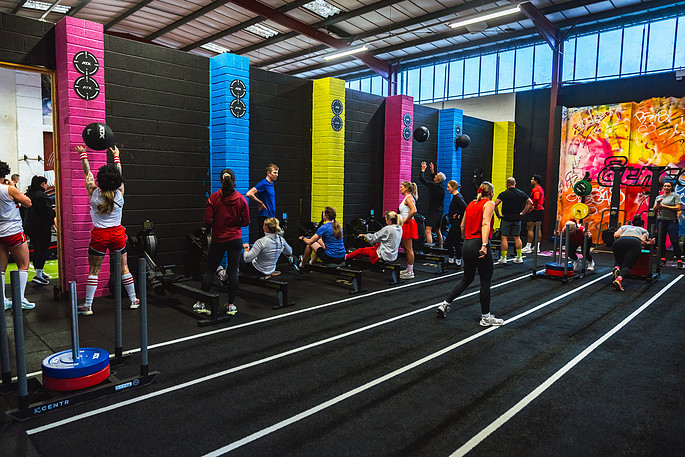
This article is written by Matt from inside the walls of @thegym, an independent training facility now home to 700+ members and a growing calendar of community events and activities.
The gym operates on the same principles discussed above - clarity of purpose, reinvestment, and long-term sustainability. Images throughout this article are taken from the facility itself.
If you are considering building a home gym or opening a commercial space of your own, you are welcome to visit, train, and experience the environment first-hand. All of the equipment in use is supplied through The Gym Revolution resource, supporting independent gyms across the UK.
Related article: How Independent Gyms Can Stay Ahead of the Chains
