Currency
GBP - British Pound

Belt squats have been around far longer than many people realise, but for a long time the belt squat machine was something you’d only ever see in very specific training environments.
Early belt squat machines were big, expensive, and usually tied to elite strength and conditioning facilities. Over time, though, that's changed. Powerlifting’s resurgence, more people picking up weights, smarter design choices, and a push for more space-efficient equipment have all helped turn the belt squat into a genuinely practical option for commercial gyms and even home setups.
Here’s a look at how that evolution happened.
Originally, machine belt squats were cable-based machines. They were incredibly effective, but also very specialist.
These early cable belt squat systems typically:
Because of this, they were usually limited to professional sports teams, universities, and high-end performance centres. For the average gym owner, they simply weren’t realistic.
Powerlifters were among the first groups to really adopt belt squats in a meaningful way.
Rather than replacing barbell squats, belt squats were used as a workaround when injuries or fatigue became an issue. They allowed lifters to load the legs heavily while reducing stress on:
One of the most well-known examples from this era is the belt squat setup at Westside Barbell.
If you ever trained on one, you’ll remember it. Massive. Overbuilt. Hugely expensive. It felt indestructible and did its job extremely well, but it was also very much a one-trick machine with limited versatility and a huge space requirement.
As powerlifting grew in popularity again, equipment started to adapt to what lifters and gyms actually needed.
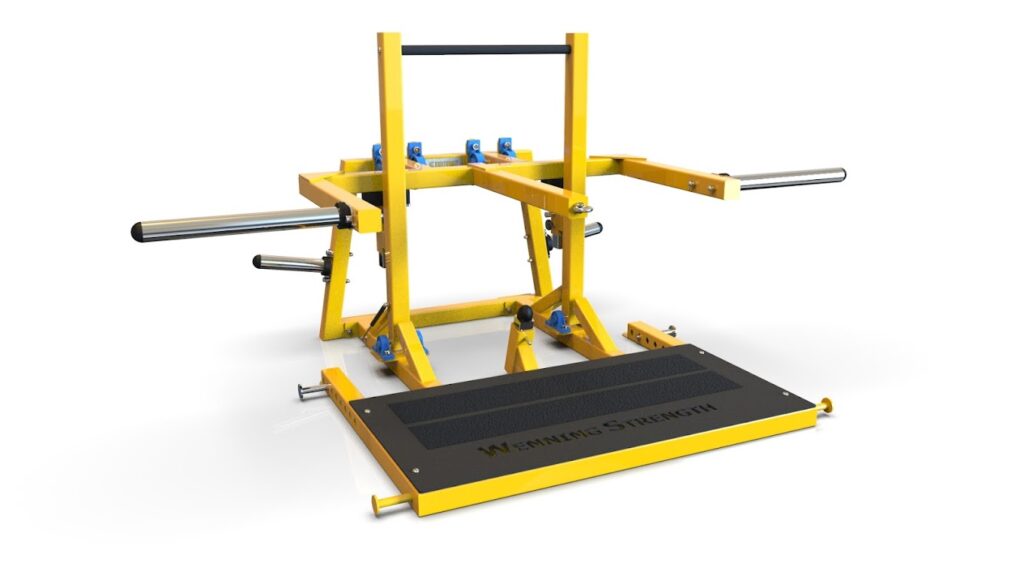
A major shift came with Matt Wenning, who is widely credited with popularising the lever, plate-loaded belt squat in the US.
This style of belt squat offered some big advantages:
Because Wenning was a powerlifter himself, the design was practical rather than flashy. That approach caught on quickly, and before long, lever belt squats were appearing in powerlifting gyms all over the world. Many manufacturers soon followed with their own variations.
In Europe, ATX were early adopters of this more compact philosophy.
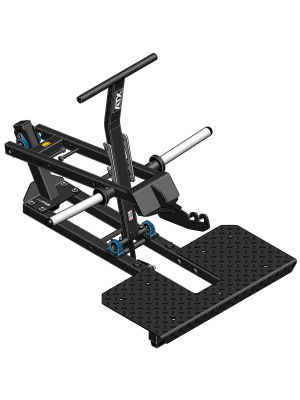
They introduced a lever belt squat specifically designed for gyms where space efficiency really matters. Smaller footprint, straightforward mechanics, and solid build quality made it an easy fit for commercial environments.
That design proved influential and, unsurprisingly, was soon echoed across many other brands.
Over the last few years, belt squats have come full circle.
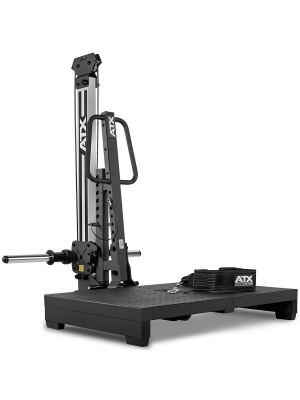
Cable belt squats have made a return, but this time in a much more refined and accessible form. Machines like the Rogue Rhino and the ATX BSM-760 reintroduced cables with some important improvements:
What was once a specialist installation suddenly became something people could realistically install on a gym floor or even in a garage gym.
Today, there isn’t a single “best” belt squat. Different designs suit different spaces and training styles.
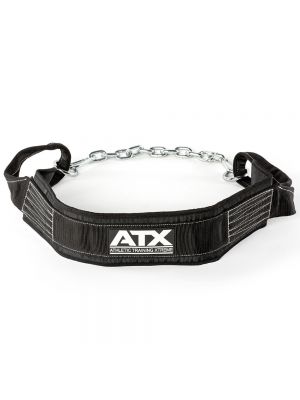
We currently offer three ATX belt squat options, covering both lever and cable-based approaches:
Each reflects a different stage in the belt squat’s evolution and suits a different type of gym environment.
To make the differences clearer, we recently filmed a comparison video covering all three machines side by side.
The video looks at:
You can watch it here:
Belt squats have moved a long way from being rare, specialist machines reserved for elite facilities.
Thanks to powerlifting’s influence and smarter equipment design, they’re now a genuinely versatile option for gyms of all sizes. Whether lever or cable-based, modern belt squats offer effective lower-body training with reduced spinal loading and far greater flexibility than ever before.
Article by Matt Bembridge (Gym Professor)