Currency
GBP - British Pound

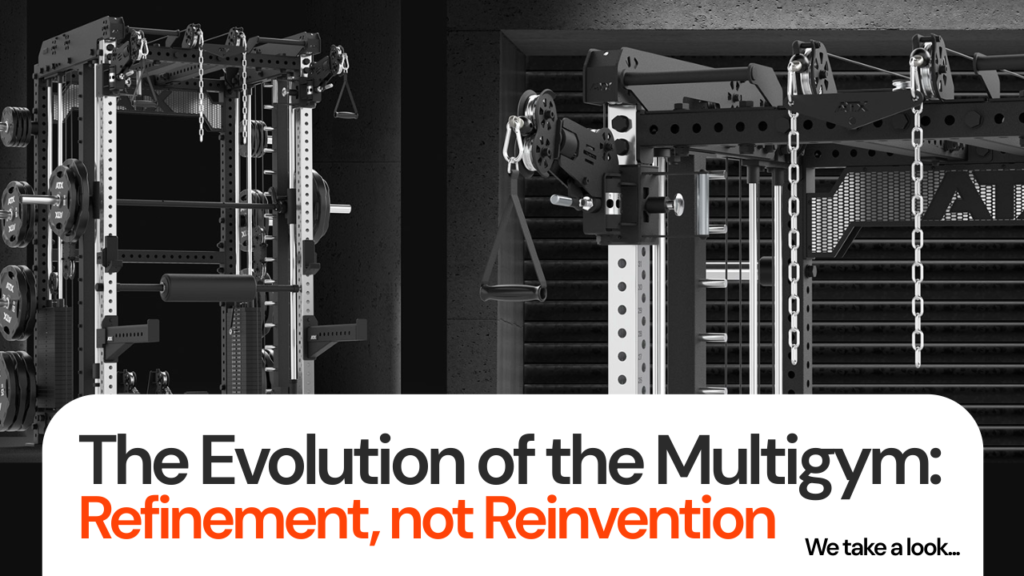
The multigym has been declared “outdated” more times than most pieces of strength equipment. And yet, year after year, it remains one of the most popular and practical solutions for serious home training and space-constrained facilities. The reason is simple: the multigym hasn’t stood still.
What we’re seeing today isn’t a revolution - it’s evolution. Some of the best multigym designs on the market now are direct descendants of machines that were already very good 10–15 years ago. They’ve simply been refined, improved, and better aligned with how people actually train.
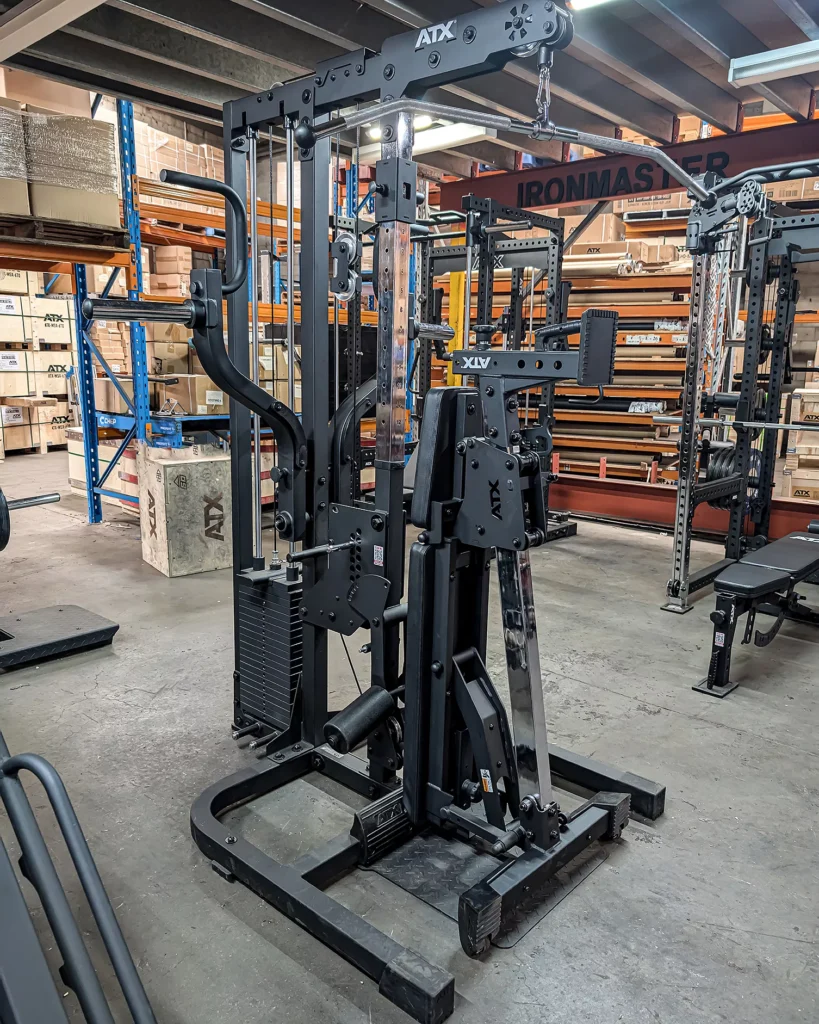
A perfect example of this long-term refinement is the evolution of the Powertec and MegaTec Tripex Leverage Multigyms into the modern ATX Triplex WSX.
The original Triplex was never trying to be a full Olympic rack or a sprawling all-in-one station. Instead, it solved a very specific problem: providing a proper leverage-based multigym for serious lifters who wanted machine work but simply didn’t have the space for a full-width rack or commercial multigym.
It was - and remains - a slimline home solution, particularly attractive to free-weight-focused users who still value the control, safety, and joint-friendliness of leverage machines.
The successor to the original Triplex didn’t reinvent the concept. It improved the parts that matter:
The WSX-680 then takes the concept one step further by introducing a more orthodox lat pulldown and row setup, closer to what you’d expect from dedicated commercial stations. The addition of a weight stack brings smoother load progression and easier use, while still preserving the compact footprint that makes the WSX series so appealing in UK homes.
This is evolution done properly: not bigger, not flashier - just better resolved.
At the top end of today’s multigym market, three names consistently come up: Rogue, REP, and ATX. On the surface, they appear to be competing in the same space, but underneath, their design philosophies differ significantly.
US brands such as Rogue and REP have leaned heavily into modular ecosystems. The idea is to start with a rack and gradually build it out with bolt-on components: cable systems, Smith machines, belt squats, leg presses, platforms, and storage. It’s an approach that suits larger spaces, longer supply chains, and a market that enjoys configuring and expanding systems over time. ATX tried it in Europe - it simply wasn't as successful as previous all-in-one systems.
The consumer has led the UK and European market in the opposite direction.
Rather than offering a modular construction kit, ATX has re-focused on self-contained, all-in-one machines. Takes on the same models that have continuously sold well and been customer favourites for more than a decade. Models such as the MPHR-780 and MXL-700 Monster 2.0 are not modular systems in the US sense, they are complete training stations, engineered as finished units.
This shift wasn’t accidental.
In the UK and European market, modular systems introduce real-world challenges:
ATX’s response was not to reduce functionality, but to separate it across multiple, purpose-built machines.
Instead of asking users to build one endlessly expandable rack, ATX offers a range of complete solutions, each designed around a specific training need:
In effect, ATX offers the end result of what many modular users are trying to build, without the complexity of getting there.
If the past decade has been about refinement, the next phase is likely to be about intelligent variation, not endless expansion.
We’re already seeing this in compact home-gym designs. Popular systems such as the WCR-600 prove that a well-designed base unit can satisfy most training needs, but also highlight what’s missing for certain users, such as a Smith machine or lower-body loading options.
Rather than turning every unit into a universal solution, the future likely lies in:
The key trend isn’t modularity for its own sake - it’s clarity of purpose.
The best multigyms on the market today didn’t become great by endlessly growing. They became great by solving specific problems better over time.
From the leverage-based WSX lineage, to the fully integrated MPHR-780 and MXL-700, the evolution of the multigym has been about engineering decisions grounded in real-world use, particularly in space-constrained UK environments.
And that may be the most important lesson of all: progress in strength equipment isn’t always about adding more. Sometimes, it’s about knowing exactly what to leave out.