Currency
GBP - British Pound

This is a revised and updated version of an article I initially penned in 2010, with slightly more depth. Though, for posterity, I've saved some of the old pictures for you.
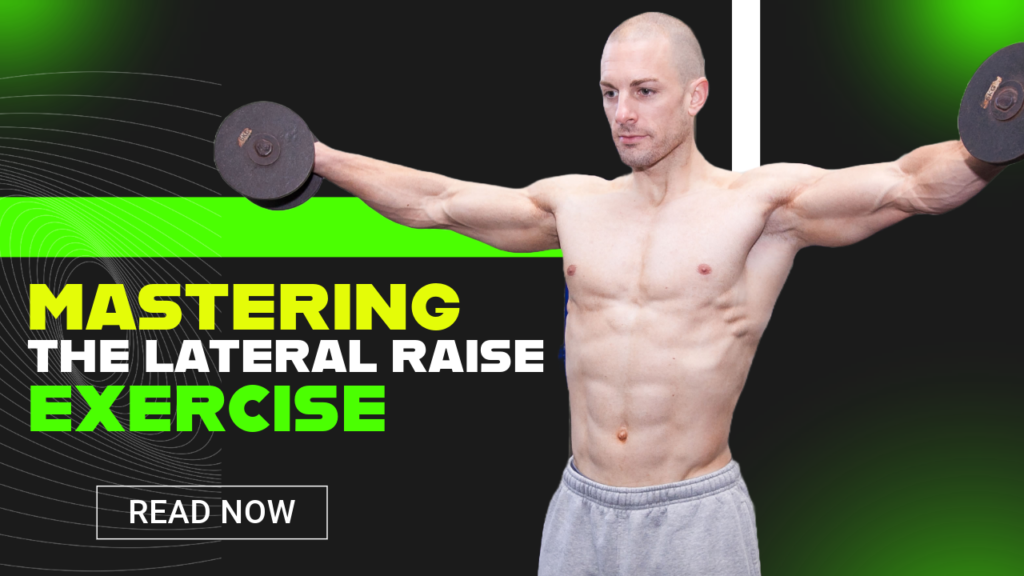
Lateral raises are a staple exercise for anyone looking to build strong and defined shoulders. They specifically target the deltoid muscles, contributing to broader, more sculpted shoulders. Whether you're a beginner or a seasoned gym-goer, mastering the lateral raise, especially with machines, can elevate your shoulder workout to the next level. Here's how to get the most out of this effective move.
Lateral raises are performed by lifting weights out to the side of the body to shoulder height and then lowering them back down. This exercise can be done with free weights, such as dumbbells, or with a standing lateral raise machine, which can provide more stability and resistance control.
The primary benefit of lateral raises is the emphasis they place on the middle section of the deltoid muscles. Strong deltoids are not only important for the overall shape of your shoulders but also for the functional movement and stability of your arms. Moreover, lateral raises help improve shoulder mobility and can contribute to better posture.
Before you start, it's important to choose the right weight. It should be light enough to perform the exercise with proper form but heavy enough to challenge your muscles.
Lateral Raises, which involve moving your arm outward from the side of your body (abduction) against resistance, are among the routine shoulder exercises I do. This is an extremely easy and effective motion that you'd assume is uncomplicated to carry out skillfully; nonetheless, it's a task that I observe frequently that could be significantly enhanced.
There are 4 primary topics I wish to discuss, as regards form and improvement of it.

First, the Supraspinatus, which is a minor muscle in the rotator cuff, aids in the lateral movement of the arm. Hence, using momentum to swing heavy weights can be quite reckless, considering this fact.
Second, avoid undue flexing of the elbow, drawing the weight nearer. If you're unable to maintain your elbow in a rigid (stiff) position, the weight is excessive. By reducing the distance, you effectively lessen the load.
Third, maintain a balanced hand-position. It's typical to observe someone rotating their hand upwards (supinate) which triggers external rotation of the arm, or turning their thumb downwards (pronate) leading to internal rotation of the arm when facing difficulties. These two factors may not optimally target the lateral head of the deltoid and could potentially lead to problems with the tendons in the arm and shoulder. The method of pouring a teapot was shown to me, whereby at the peak of the action, you deliberately aim to raise your pinky to keep hand-position intact.
Fourth, the middle position should be a little higher than the shoulder level. Small movements offer a mechanical benefit without exhausting the lateral aspect of your deltoid to its fullest. When parallel, the weight reaches its peak (heaviest) point. Going a bit further would elevate your shoulder, engaging the mid traps to help with the motion.

To summarize, maintain lighter weights and focus on the technique. Begin a little distance from your thigh. Raise the weight with caution, maintaining a balanced hand/ arm posture, to slightly above the level of your shoulder. After that, gradually bring it down to the initial position and do the action again.
I find the approach of some golden era bodybuilders, such as Frank Zane, for one-arm dumbbell lateral raises quite intriguing and use it myself, sometimes. They often grip a machine upright with their free hand to angle themselves approximately 75-degrees, as opposed to the typical 90-degree upright stance. From this position, a lateral raise with the dumbbell is performed. The dumbbell naturally begins a few inches away from the thigh, which aids in maintaining proper form.
This workout can be done using one arm at a time or two-arm (simultaneously using both arms). Resistance can be achieved through various means such as dumbbells, cables, bands, kettlebells, or even water bottles.
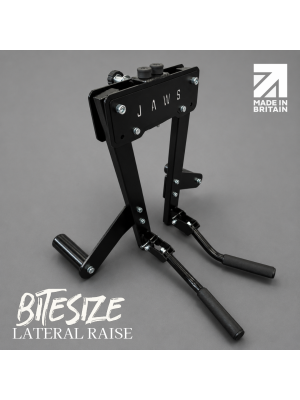
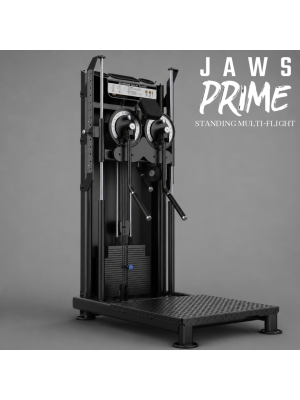
Machines are more commonplace, these days. Some machines are not mindful enough of the ergonomics and proper exercise form to get the most from the exercise. Find one that is and it'll breath new life in to this great exercise for you. Here's an example of a JAWS piece that we use:
By following these guidelines, you can effectively incorporate lateral raises into your workout regimen. Remember, consistency and proper form are key to seeing progress. With time and dedication, you'll notice improved strength and definition in your shoulders.
If you're unsure about your form or how to use the standing lateral raise machine, consider seeking guidance from a fitness professional. Happy lifting!
Matt