Currency
GBP - British Pound


The Bulgarian split squat is a popular exercise that targets the legs, specifically the quads, glutes, and hamstrings. It is a unilateral exercise, meaning it works one leg at a time, making it a great choice for correcting muscle imbalances and improving overall strength and stability.
In this rough guide, we will cover what you need to know about the Bulgarian split squat, including proper form, variations, and the benefits of incorporating it into your workout routine.
The Bulgarian split squat, also known as the rear-foot elevated split squat, is a variation of the traditional squat exercise. It involves standing on one leg with the other leg elevated behind you on a bench or box or a purpose-made split squat stand. The front leg is then used to lower the body into a squat position, engaging the muscles in the leg and glutes. You tend to feel a stretch on the opposing (supposedly relaxing) quads/ thigh.
by Scott Herman Fitness (this is a good video☝️)
To perform a Bulgarian split squat with proper form, follow these steps:
When performing a Bulgarian split squat, it is important to maintain proper form to avoid injury and get the most out of the exercise. Here are some common mistakes to avoid:
There are several variations of the Bulgarian split squat that can be incorporated into your workout routine to add variety and challenge your muscles in different ways. Here are a few to try:
Adding dumbbells to the Bulgarian split squat increases the resistance and adds an upper body component to the exercise. To perform this variation, hold a dumbbell in each hand and let your arms hang by your sides. Follow the same steps as the traditional Bulgarian split squat, but with the added weight. *Personally, if you have kettlebells, I prefer using a kettlebell (or 2) to add more resistance.

Using a barbell for the Bulgarian split squat allows for even more resistance and can help improve overall strength. To perform this variation, hold a barbell across your upper back, resting it on your shoulders. Follow the same steps as the traditional Bulgarian split squat, but with the added weight.

Bulgarian split squat jumps add a plyometric element to the exercise, increasing the intensity and adding a cardiovascular component. To perform this variation, start in the traditional Bulgarian split squat position and explosively jump up, switching legs in mid-air and landing in a split squat position with the opposite leg in front. Repeat for the desired number of reps.
Incorporating the Bulgarian split squat into your workout routine can offer a variety of benefits, including:
Since the Bulgarian split squat is a unilateral exercise, it requires balance and stability to perform correctly. This can help improve overall balance and stability, which is important for everyday activities and sports performance.
Many people have muscle imbalances, meaning one side of their body is stronger than the other. The Bulgarian split squat works one leg at a time, helping to correct any imbalances and create more symmetry in the body.
The Bulgarian split squat targets the muscles in the legs, including the quads, glutes, and hamstrings. By regularly incorporating this exercise into your routine, you can increase leg strength and improve overall lower body function.
The Bulgarian split squat can be performed with minimal equipment, making it a convenient exercise to do at home or in the gym. It can also be easily modified to add more resistance or challenge different muscle groups.
The Bulgarian split squat can be incorporated into your workout routine in a variety of ways. Here are a few suggestions:
While the Bulgarian split squat can be performed with minimal equipment, there are some pieces of equipment that can make the exercise more comfortable and effective.
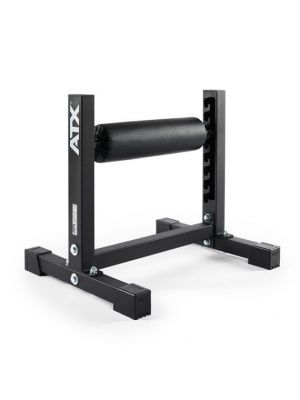
A Bulgarian split squat stand is another piece of equipment that can be used to perform the exercise. It consists of a roller pad which can be adjusted on uprights. These are small and lightweight pieces of gym equipment that can be easily moved into position in a gym. As Matt mentions, a similar setup can be achieved using a roller pad of a station or a barbell pad on a racked free bar (barbell).
The Bulgarian split squat is a highly effective exercise for targeting the muscles in the legs and improving balance and stability. By incorporating it into your workout routine and using proper form, you can reap the many benefits of this versatile exercise. So grab a bench or box and give the Bulgarian split squat a try today!